
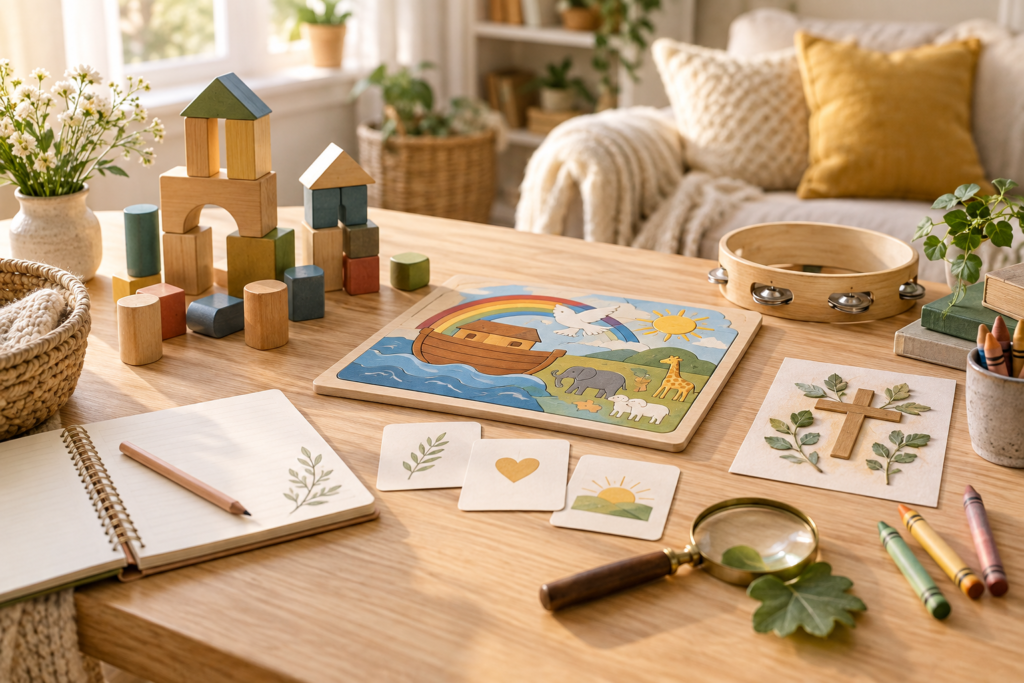
Discovering ways to integrate toys and activities that encourage learning into playtime is a valuable goal for parents and educators alike. Children absorb knowledge best when they’re engaged and curious, and selecting toys and activities that inspire learning can make a significant difference. Whether fostering problem-solving skills, creativity, or moral understanding, the right tools encourage growth in meaningful, enjoyable ways.
Faith-based environments often emphasize holistic development, combining spiritual lessons with cognitive and social skills. Toys and activities that align with these values can support children’s overall development while reinforcing key principles. This approach not only nurtures intellect but also encourages empathy, patience, and critical thinking.
Affiliate disclosure: Some links in this article are affiliate links. If you make a purchase through an affiliate link, I may earn a commission at no additional cost to you. As an Amazon Associate I earn from qualifying purchases.
1. Building Blocks Set
Building blocks are a timeless resource that promotes spatial awareness, fine motor skills, and creativity. Children can experiment with shapes, balance, and design, which lays the foundation for STEM learning. Blocks made from natural materials also provide tactile engagement and durability, suitable for both solo and group play.
Why it stands out: It encourages hands-on problem-solving and imaginative play while subtly introducing concepts like engineering and architecture.
2. Bible Story Puzzle
Puzzles featuring biblical scenes and stories help children develop memory, pattern recognition, and narrative skills. Working to assemble pieces encourages patience and attention to detail, while the familiar stories reinforce faith lessons. These puzzles can be enjoyed independently or as a family activity, promoting discussion and connection.
Why it stands out: It combines cognitive skill-building with spiritual education in an accessible, interactive format.
3. Faith-Based Storybooks with Interactive Elements
Storybooks that incorporate pop-ups, flaps, or sound elements bring scripture and moral lessons to life. These interactive features maintain engagement and enhance comprehension, especially for younger readers. The tactile experience supports language development and imagination while reinforcing positive values.
Why it stands out: It transforms reading into an immersive experience that deepens understanding and retention of faith stories.
4. Scripture Memory Cards
Memory cards printed with key verses encourage children to memorize scripture in a playful way. These cards can be used in matching games or as flashcards, making repetition enjoyable rather than monotonous. Incorporating visuals or simple explanations helps younger children grasp the meaning behind the words.
Why it stands out: It makes learning scripture approachable and fun, supporting spiritual growth alongside cognitive development.
5. Creative Art Kits with Faith Themes
Art kits that focus on biblical themes or symbols invite kids to express their understanding of faith through creativity. Activities like painting, coloring, or crafting foster fine motor skills and artistic expression. They also provide an opportunity to discuss the significance behind the artwork, deepening spiritual reflection.
Why it stands out: It links creative play with meaningful conversation, enhancing both emotional and cognitive engagement.
6. Educational Board Games with Moral Lessons
Board games designed around faith-based principles teach strategy, cooperation, and ethical decision-making. Players often face challenges that require empathy, honesty, or teamwork, mirroring real-life situations. These games encourage social interaction and healthy competition in a faith-aligned context.
Why it stands out: It promotes character development while honing critical thinking and social skills.
7. Musical Instruments with Worship Songs
Simple instruments paired with worship music invite children to explore rhythm and melody as they learn hymns or spiritual songs. Music enhances memory and auditory skills, and singing together builds community and confidence. Instruments like tambourines or xylophones are easy to handle and encourage active participation.
Why it stands out: It combines musical education with worship, making learning multidimensional and joyful.
8. Nature Exploration Kits with Reflection Guides
Kits that include tools for observing nature, such as magnifying glasses or bug catchers, paired with reflection prompts inspired by faith, encourage curiosity and spiritual contemplation. Exploring the natural world nurtures wonder and appreciation for creation, fostering both scientific inquiry and reverence.
Why it stands out: It integrates outdoor learning with faith-based mindfulness and respect for the environment.
9. Role-Playing Sets with Biblical Characters
Role-playing kits that feature costumes or props related to biblical figures enable children to act out stories and internalize lessons. This type of imaginative play builds empathy and communication skills while reinforcing scriptural narratives. Acting out scenarios also helps children grasp complex ideas through experience.
Why it stands out: It facilitates active learning and emotional connection to faith teachings.
10. Journals with Guided Devotional Prompts for Kids
Journals designed with age-appropriate devotional prompts encourage children to reflect on their faith and daily experiences. Writing can improve literacy and emotional intelligence, providing a safe space for self-expression and spiritual growth. These journals often include inspirational quotes or questions to spark thoughtful responses.
Why it stands out: It supports personal reflection and communication skills, as well as spiritual development.
Final Thoughts
Selecting toys and activities that encourage learning within a faith context benefits children on multiple levels. These tools nurture intellectual abilities while deepening spiritual understanding, creating a balanced approach to development. By blending education with values, children gain skills and insights that resonate beyond the playroom.
Parents and educators can feel confident choosing items that foster curiosity, creativity, and character simultaneously. The options presented help make learning engaging and relevant, encouraging children to explore both their minds and their beliefs. Ultimately, these resources lay a foundation for lifelong growth rooted in knowledge and faith.
Incorporating thoughtful toys and activities into daily routines invites meaningful interaction and discovery. Starting with simple, enjoyable experiences can spark a love for learning and faith that endures. Embracing this approach empowers children to thrive intellectually and spiritually in a supportive environment.