
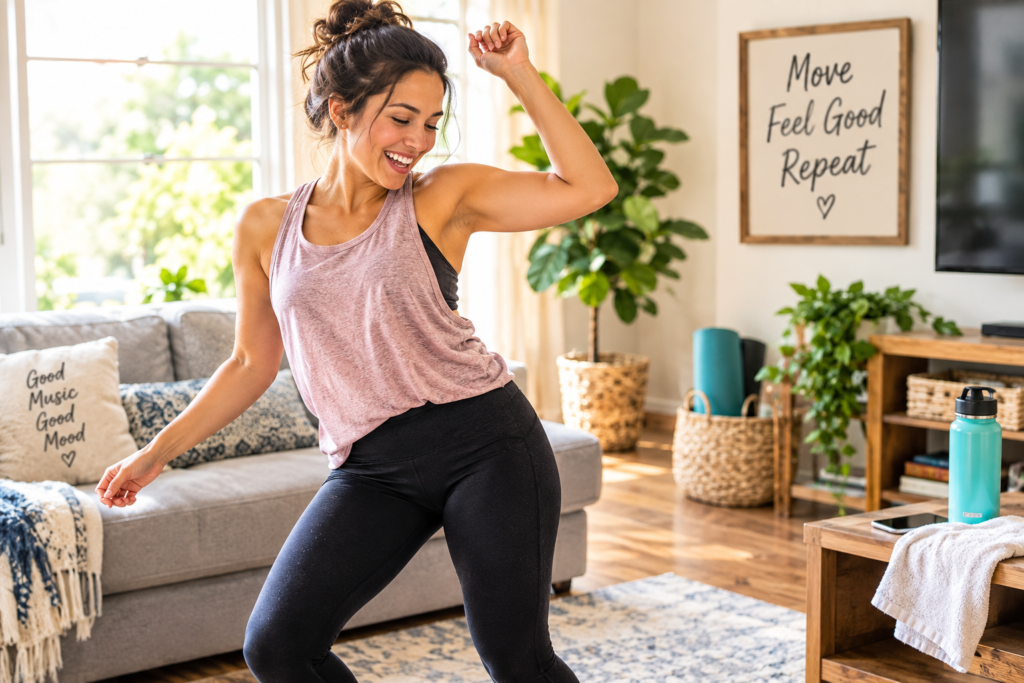
Moving your body does not have to mean forcing yourself through a workout you dread. Dance fitness at home can bring a joyful, flexible way to stay active, especially when a busy schedule, limited space, or low motivation makes traditional exercise hard to maintain.
Whether you’re dancing alone in the living room, following an online class, or inviting your children or partner to join you, dance fitness can meet you where you are. It can be energetic or gentle, planned or spontaneous. The goal is not to look polished. It’s to find a form of movement that helps you feel more present in your body and at ease in everyday life.
For many households, a little music and movement can also shift the mood. It will not solve every stressful day, but it may offer a small, healthy release when everyone feels restless, disconnected, or worn down.
Why Dance Fitness at Home Can Work So Well
Dance is often easier to return to than exercise that feels like a chore. Music gives movement a rhythm, which can make time pass more quickly. Instead of counting down the minutes until a workout ends, you may find yourself focused on the next song, the beat, or the simple pleasure of moving.
Dance can support different aspects of physical fitness, depending on the style and pace you choose. An upbeat session may raise your heart rate and help build endurance. Slower movement can encourage flexibility, balance, coordination, and body awareness. Even a few songs of easy movement can help break up long periods of sitting.
Just as importantly, dance leaves room for personality. You do not need athletic experience, expensive equipment, or a certain body type to move to music. You can try line dancing, hip-hop, salsa-inspired workouts, gentle chair dancing, ballet-based movement, worship dance, folk dance, or simply make up your own steps while dinner is in the oven.
That freedom matters. A fitness routine is more likely to become part of your life when it feels accessible rather than punishing.
Start With the Kind of Movement You Actually Enjoy
The best dance fitness routine is not necessarily the most intense one. It is the one you can imagine doing again next week.
If you enjoy structure, an online beginner dance class or a local community class may be a good fit. You may feel more confident when someone else leads the steps and sets the pace. If choreography feels intimidating, choose a follow-along workout designed for beginners or look for styles that use simple, repeated movements.
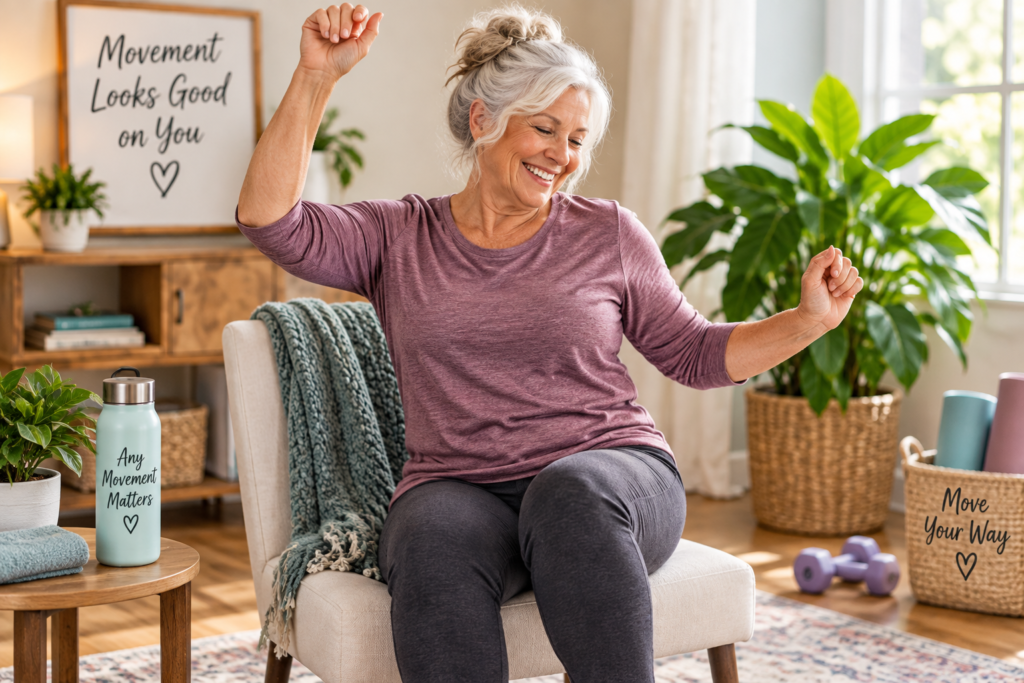
If you prefer privacy, create your own low-pressure routine at home. Put together a short playlist of songs that make you want to move. Start with two or three songs rather than expecting yourself to dance for an hour. A ten-minute dance break is still movement. It still counts.
You might also consider what feels comfortable in your current season:
- Gentle, low-impact dance may be a better choice if you are returning to movement after time away.
- Chair-based movement can make dance more accessible when standing for long periods is difficult.
- A family dance party may work well when young children need to burn off energy too.
- A quiet evening of slow dancing with a partner can be a simple way to connect without planning a formal date night.
- A solo dance session may offer privacy and emotional breathing room after a demanding day.
There is no need to choose one style forever. Your energy, schedule, health, and responsibilities may change from week to week, so give your routine room to change too.
Make Space for Dance in an Ordinary Day
One of the kindest things about dance is that it does not require a perfect setup. You do not need a home gym or a spotless living room. A cleared corner of the bedroom, kitchen, basement, porch, or shared family room may be enough.
Safety is still worth considering. Move furniture or loose rugs if they could cause a fall, wear supportive shoes if you need them, and choose a pace that feels appropriate for your body. If you have an injury or chronic condition, are pregnant, or have concerns about beginning a new exercise routine, a qualified healthcare professional can help you understand what movement may be suitable for you.
Once you have a safe space, look for natural openings in your day. Dance does not always need to be scheduled as a full workout. It can fit into the small spaces already there.
Try dancing while:
- Waiting for the coffee to brew or the laundry cycle to finish
- Taking a mid-afternoon break from work or household tasks
- Resetting the mood after school or before dinner
- Warming up before a walk or another form of exercise
- Celebrating the end of a hard day with one favorite song
- Giving yourself a few minutes of movement before settling into your evening routine
These moments may seem small, but they can help movement become part of daily life rather than one more obligation to manage.
Let Dance Bring a Little More Connection at Home
A home does not need to be perfectly peaceful to hold moments of connection. Sometimes the people under one roof are tired, distracted, irritated, or moving in different directions. Dance will not erase conflict or fix deeper relationship concerns, but it can create a brief shared experience that feels lighter.
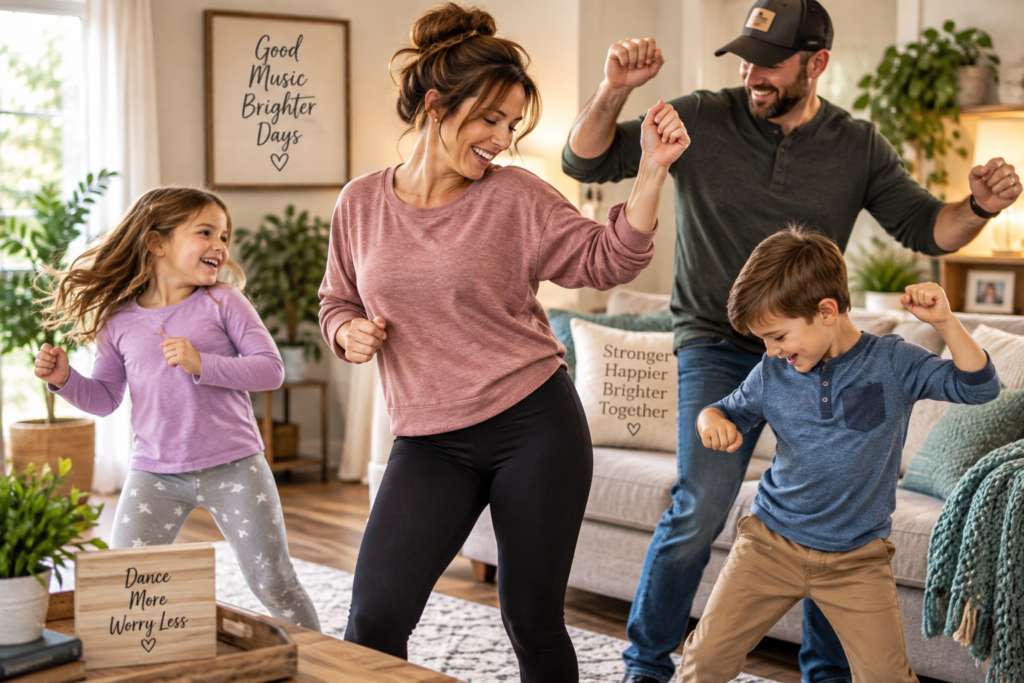
A family dance party is one simple option. Let each person choose a song, take turns making up a move, or keep it easy with familiar music and no rules. Children do not need a lesson in technique. They often just need permission to be silly, loud, and active for a few minutes.
For adults, dancing together can be less about performance and more about attention. You might play music while cooking, dance slowly in the kitchen after the children are asleep, or take a beginner class together. If one person is hesitant, keep the invitation gentle. No teasing, correcting, or pressure required.
Shared movement can also work well across generations. A grandparent, teenager, friend, or neighbor may enjoy seated dancing, an easy group routine, or music connected to meaningful memories. The point is not to get everyone into the same fitness plan. It is to give people ways to participate that feel comfortable.
Some days, though, movement is best kept personal. If your home is crowded, stressful, or emotionally tense, a solo dance break with headphones may be the boundary you need. Caring for your well-being is not selfish. A few minutes to breathe, stretch, and move may help you return to the people and tasks in front of you with a little more patience.
Release the Pressure to “Be Good” at Dancing
Many adults stop dancing because they feel self-conscious. You may remember being told you had no rhythm, feel uncomfortable in exercise spaces, or assume dance belongs to people who are naturally coordinated. That belief can take the joy out of something that was once instinctive.
You do not need to earn the right to dance by becoming skilled first. You can move awkwardly. You can miss the beat. You can repeat the same step for an entire song. None of that makes the movement less worthwhile.
In fact, letting go of the need to perform can be one of the healthiest parts of dance fitness. Your body is not a project that has to impress anyone. It is the body carrying you through work, caregiving, relationships, grief, celebrations, errands, and ordinary mornings. Movement can be a practical way to care for it without turning every activity into a test.
If embarrassment keeps getting in the way, begin privately. Close the bedroom door, use headphones, or choose a time when you have the space to yourself. You may feel more comfortable after a few sessions. Or you may always prefer dancing alone, and that is fine too.
Looking for something you can follow online? Body Groove offers follow-along dance workouts designed to make movement feel approachable and fun.
Build a Routine That Has Room for Real Life
Consistency does not have to mean doing the same thing at the same time every day. When you are balancing family responsibilities, changing work demands, or caregiving, a rigid routine can fall apart quickly.
Instead, create a few versions of your dance practice. On a high-energy day, you might enjoy a longer class or a lively playlist. On a full or exhausting day, one song may be all you have time for. Both can belong in your routine.
It can help to decide ahead of time what “small” looks like. Perhaps your minimum is five minutes of movement, one song after lunch, or a short stretch and sway before bed. Having a smaller option helps counter the all-or-nothing thinking that often makes it difficult to sustain fitness habits.
You might also pair dance with an existing habit. Play music while you tidy the kitchen. Put on a favorite song after you change out of your work clothes. Choose a weekend morning for a family dance break before errands begin. These simple anchors can make the habit easier to remember.
And if you skip a week, nothing has been ruined. Life interrupts routines. Start again with the next song, not with guilt.
Choose Support That Feels Safe and Respectful
If you decide to try a class, video, or dance community, look for an environment that respects different ability levels and offers encouragement without shame. A good instructor should provide options for intensity and movement modifications rather than treating pain or exhaustion as proof of effort.
It is also okay to leave a class or fitness space that makes you feel judged, pressured, or uncomfortable. Movement should not require you to ignore your physical limits or endure comments about your body. Look for instructors and communities that make room for different bodies, abilities, and starting points.
A sustainable practice is built on care, not criticism.
Final Thoughts
Dance fitness can be as simple as choosing one song and letting your body move. It does not have to be organized, expensive, or impressive to be meaningful. A short burst of movement may bring energy to a quiet afternoon, release tension after a long day, or create a moment of laughter in a busy home.
Let dance serve your life rather than become another standard to meet. Put on music you love, make a little space, and begin where you are.