

Christian teens today have a wealth of digital resources at their fingertips, including apps that support spiritual growth, Bible study, prayer, and community engagement. However, with the vast number of apps available, finding safe Christian apps for teens that encourage faith can feel overwhelming for parents, youth leaders, and the teens themselves. Choosing apps that provide trustworthy content, foster positive habits, and protect young users from inappropriate material is essential for cultivating a healthy and vibrant faith life in the digital age.
This article explores how to identify safe, enriching Christian apps for teens and highlights key features that set them apart. By examining what parents and teens should look for in faith-based apps, this guide aims to empower families and youth ministries to leverage technology to support spiritual development.
What Makes a Christian App Safe and Faith-Building for Teens?
When considering apps designed for Christian teens, safety and faith encouragement go hand in hand. Safety means more than just avoiding harmful content—it includes privacy protection, positive community interactions, and user-friendly design that respects teen sensibilities.

Faith-building qualities include theology that aligns with biblical teachings, interactive features that deepen understanding, and tools that facilitate daily spiritual practices. Here are the key factors to evaluate:
- Content Accuracy and Alignment: The app should present biblical truths clearly and accurately without promoting misleading doctrines. Look for apps developed or endorsed by reputable Christian organizations or leaders.
- Age-Appropriate Design: The interface, language, and topics must be suitable for teen users, avoiding overly complex or too simplistic content.
- Privacy and Security: Data protection policies should be transparent, and the app should minimize data collection to protect teen privacy.
- Community Moderation: If the app has social or interactive features, moderation is critical to prevent bullying, inappropriate language, or exposure to harmful content.
- Encouragement of Active Faith: The app should promote engagement through prayer prompts, scripture memorization, worship music, journaling, or service opportunities.
- Parental Controls: Features that allow parents to monitor or limit app usage can provide additional peace of mind.
Key Features to Look for in Safe Christian Apps for Teens
When teens use apps to nurture their faith, the right features can transform passive consumption into active growth. Here are some of the most valuable features commonly found in trusted Christian apps for youth:
- Daily Devotionals: Short, relatable devotionals help teens connect scripture to everyday life, fostering regular spiritual reflection.
- Interactive Bible Study Tools: Highlighting, note-taking, and reading plans make Bible reading more engaging and personalized.
- Prayer Journals and Reminders: These features encourage teens to develop consistent prayer habits and track their spiritual journey.
- Worship Music and Podcasts: Access to contemporary Christian music and faith-based podcasts can inspire worship and deepen understanding.
- Community Groups: Safe, moderated spaces for teens to discuss faith topics encourage fellowship and support.
- Challenges and Quizzes: Gamified elements motivate teens to learn scripture and apply biblical principles in fun ways.
- Offline Access: The ability to use the app without internet ensures teens can engage with their faith anywhere, anytime.
Examples of How Faith-Focused Apps Support Teen Spiritual Growth
Christian apps that combine safety with rich spiritual content often see teens returning daily, making faith an integral part of their digital routine. Here are some ways these apps serve their purpose effectively:
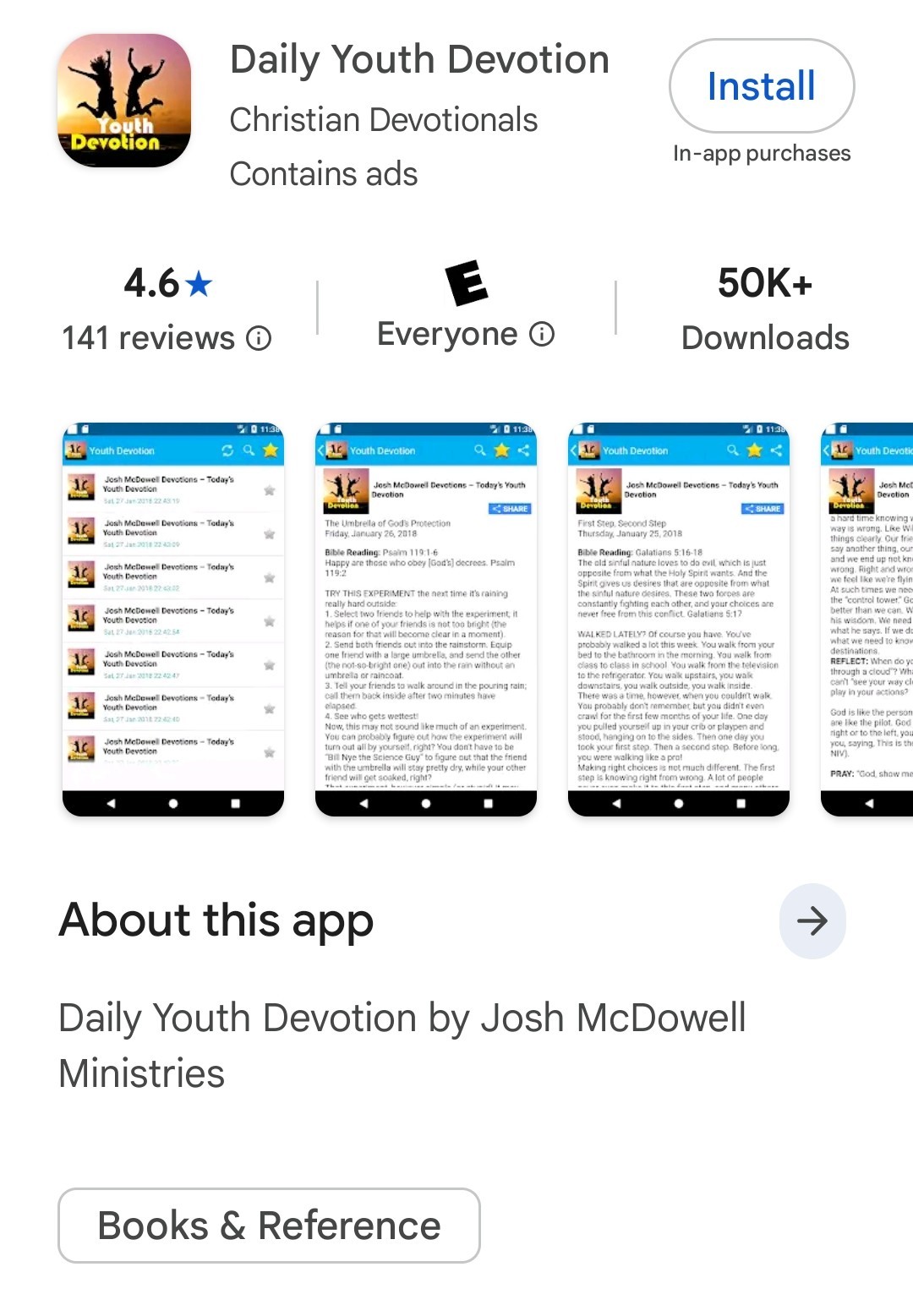
~ Josh McDowell Youth Ministries ~
- Making Scripture Relatable: Many apps use multimedia elements like videos, stories, and real-life testimonies to help teens see how biblical truths apply to their lives.
- Building Consistent Habits: Features such as daily reminders, streaks, and community challenges encourage teens to engage with their faith regularly, turning spiritual disciplines into enjoyable habits.
- Encouraging Reflection and Prayer: Prayer journals and guided reflections provide a safe space for teens to express doubts, gratitude, and concerns, fostering emotional and spiritual resilience.
- Facilitating Connection: Community forums and group chats, moderated by trusted leaders, foster a sense of belonging, helping teens feel supported in their faith journeys.
- Supporting Parents and Leaders: Many apps offer resources to help adults guide teens’ spiritual growth, making family or group engagement easier and more meaningful.
How to Choose the Right Christian App for Your Teen
Selecting the best app depends on the teen’s unique spiritual needs, maturity level, and the family’s values. Here are practical steps to make a confident choice:
- Research and Vetting: Read reviews from other Christian families and youth leaders. Look for apps with positive feedback about content quality and safety.
- Test the App Yourself: Explore the app’s content and features before recommending it. This firsthand experience helps identify any concerns.
- Involve the Teen: Ask what features appeal to them and which apps they find engaging. Teens are more likely to benefit from apps they enjoy using.
- Set Usage Boundaries: Discuss healthy screen-time habits and establish expectations for app use, especially regarding privacy and online interactions.
- Monitor and Discuss: Regularly check in with your teen about their app experience and encourage open conversations about faith and online safety.
Balancing Technology and Faith Formation

While Christian apps provide valuable tools for spiritual growth, they work best when thoughtfully integrated into a broader faith-formation environment. Encourage teens to complement app use with real-life fellowship, church involvement, and family devotion times. Technology should enhance—not replace—personal relationships and hands-on ministry experiences.
Parents and youth leaders can facilitate this balance by setting examples of intentional faith practices and modeling how to use technology as a resource rather than a distraction. The goal is to help teens develop a faith that is resilient, active, and relevant, supported by tools that respect their developmental stage and spiritual needs.
Final Thoughts
Navigating the digital landscape to find safe Christian apps for teens that encourage faith requires discernment and intentionality. By focusing on apps that combine trustworthy biblical content, age-appropriate design, and robust safety measures, families and youth leaders can confidently integrate technology into spiritual growth efforts. These apps can become powerful allies in helping teens deepen their relationship with God, establish meaningful spiritual disciplines, and connect with a faith community.
Ultimately, the most effective faith-building happens when technology supports a holistic approach—one that includes prayer, scripture, worship, service, and fellowship in everyday life. Encouraging teens to engage with their faith through safe and enriching apps is a practical step toward nurturing a lifelong, vibrant Christian walk.