
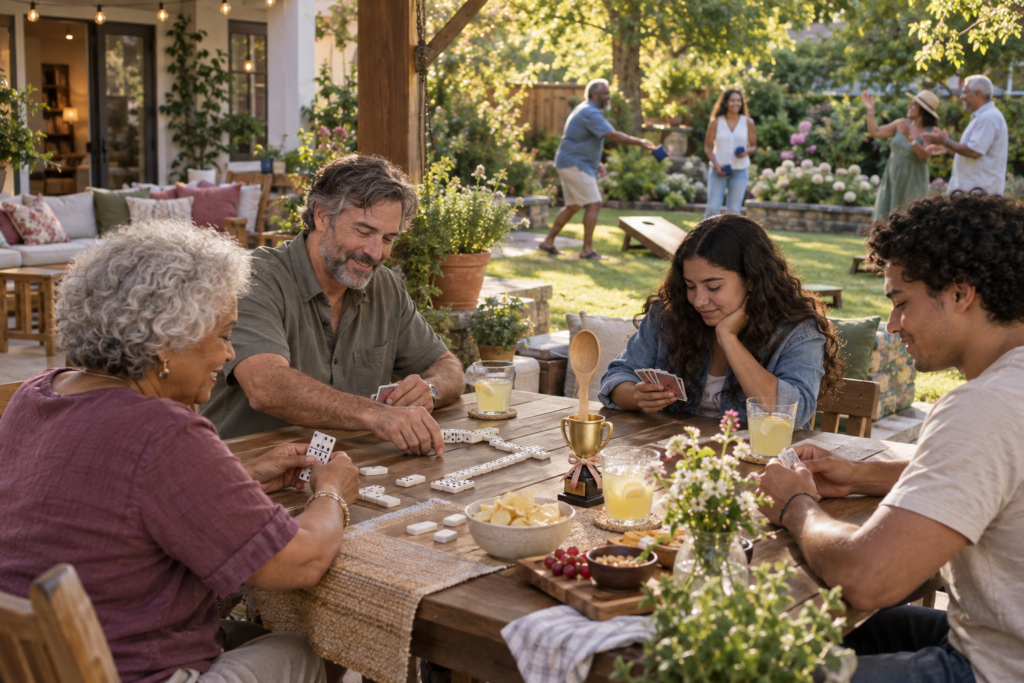
Family gatherings can feel a little tricky once the kids are teens or grown. We may still want time together, but nobody wants to be pulled into a forced icebreaker, asked twenty questions about work or dating, or expected to perform enthusiasm for a photo.
The good news is that meaningful family time doesn’t have to look like a perfectly planned reunion. Often, the best family gathering activities for teens and adult kids give people something to do together, room to choose their level of involvement, and a reason to laugh without putting anyone on the spot.
Social connection matters, and supportive relationships can help us handle stress and encourage healthier habits, according to the CDC. But connection is rarely created by pressure. We can make room for it with a few simple, low-stakes activities and let the rest unfold naturally.
What Makes Family Gathering Activities Feel Less Forced
Before choosing an activity, it helps to think less about what will impress everyone and more about what will make participation easy.
Activities often feel more inviting when they have a shared purpose, short rounds, and no requirement for everyone to join at once. We can offer a few options rather than building the whole gathering around one big event. Someone may want to play cards for twenty minutes, while someone else would rather help in the kitchen or sit nearby and listen.
It also helps to skip activities that feel like a public interview. Walking, cooking, playing a game, or working side by side gives conversation room to develop without making someone answer a serious question while the whole table waits.
1. Host a Family Recipe Remix
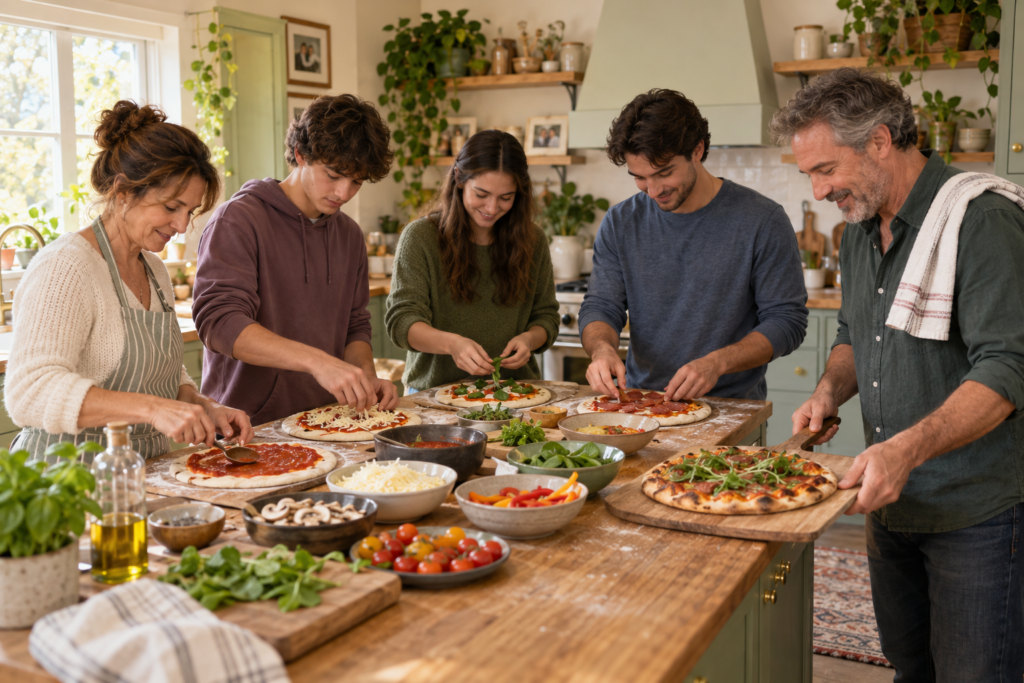
Choose one familiar family recipe and invite everyone to put their own spin on it. Maybe Grandma’s chili becomes a mild, spicy, vegetarian, or slow-cooker version. Maybe everyone decorates cookies or builds a personal pizza.
This works especially well because there’s a natural task for every person: chopping, mixing, taste-testing, setting the table, or taking photos. We don’t need to make it a serious competition. A simple vote for “most creative,” “best name,” or “most likely to become a new tradition” is plenty.
If food will be sitting out for a while, follow current USDA guidance for keeping hot and cold dishes at safe temperatures.
2. Try a “Teach Us Something” Round
Give each person the option to teach a skill in ten minutes or less. A teen might show the family a phone shortcut or a dance trend. An adult child might teach everyone to make a favorite coffee drink or demonstrate a basic car-care tip. A grandparent or older relative might share a sewing repair, card game, gardening tip, or family dish.
The goal isn’t polished instruction. It’s letting each person contribute something they know. This kind of exchange quietly says, “We see what you can do, and it matters to us.”
3. Make a Family Playlist Together
Create a shared playlist for the gathering, a road trip, a holiday, or simply “songs that remind us of home.” Ask everyone to add one or two songs and briefly share why they chose them.
We can make this as meaningful or silly as the moment calls for. Some families may include worship music, songs from childhood, or a song that reminds them of someone they miss. Others may end up debating the best early-2000s song. Both can make room for connection.
For relatives who aren’t comfortable using a streaming service, someone can write down their choices and add the songs later.
4. Set Up a Photo and Story Swap
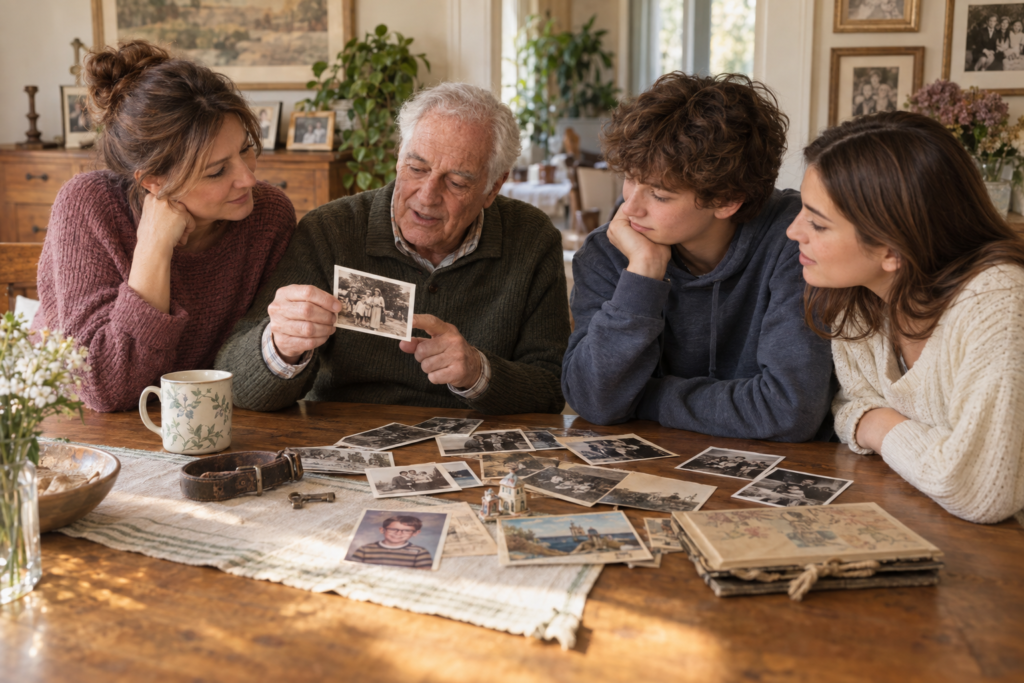
Ask guests to bring one printed photo, saved phone photo, or small object with a story behind it. It doesn’t need to be sentimental. It could show a first apartment, an old pet, a funny school picture, a vacation, or a memorable haircut.
Rather than going around the room in formal order, place the photos and objects on a table and let conversation happen naturally. This gives quieter family members something to look at and respond to without requiring a speech.
If our family is in a season of grief, this can also be a gentle way to remember someone who is no longer present. We don’t have to make the moment heavy, but we don’t have to avoid the person’s name either.
5. Plan a Low-Key Trivia Game
Family trivia works best when it stays light. Include questions about pop culture, music, sports, food, local history, and family memories rather than turning the game into a test of who knows the most.
Try questions like:
- Which family member is most likely to order dessert first?
- What was Mom’s first job?
- Which song would Uncle James choose for karaoke?
- What snack disappears fastest at family gatherings?
- What year did this family tradition begin?
Use mixed-age teams so people can help one another. A few short rounds are usually enough before attention starts to wander.
6. Take a Walk With a Purpose
A neighborhood walk, park stroll, or casual photo scavenger hunt can break up a long afternoon indoors. Give walkers a simple prompt: find something beautiful, something that reminds you of childhood, something in your favorite color, or something shaped like a letter of the alphabet.
Group walks can offer both movement and social support, and the CDC notes that activity groups can create opportunities for encouragement and shared experiences.
Keep the route short and participation optional. Offer a seated alternative, such as looking through old photos, working on a puzzle, or helping prepare snacks for when the walkers return.
7. Hold a Casual Game Tournament
Not every family enjoys the same games, so offer choices rather than declaring one official tournament. Cards, dominoes, charades, board games, lawn games, video games, and puzzle races can all work.
The key is to keep the stakes low. We can play short rounds and let people join late, switch teams, or step away without making it a big deal. A ridiculous homemade “trophy” or bragging-rights title is often more fun than a real prize.
8. Create an Anonymous Question Bowl
Write simple prompts on slips of paper and place them in a bowl. Everyone can add a question, then take turns drawing one. This helps conversation move beyond small talk without putting one person under a spotlight.
Good prompts include:
- What is a small thing that made you laugh recently?
- What food could you eat every week?
- What has been your favorite age so far?
- If you had an unexpected free day, how would you spend it?
- What is one skill you’d like to learn?
Anyone can skip a question that feels too personal. That freedom matters.
9. Make Care Packages Together
A shared service project gives the gathering a purpose beyond entertainment. Families can assemble simple care packages for neighbors, college students, new parents, teachers, local ministry partners, or someone going through a hard season.
Keep the project modest. A few handwritten notes, snacks, toiletries, or small practical items can be enough. If we’re donating through an organization, we should check its guidelines before choosing what to pack. We don’t need a large budget to practice hospitality; the point is to notice someone else and respond with care.
This can be a meaningful way to keep faith present in a gathering without turning the day into a lesson. Serving together reminds us that love often looks ordinary and practical.
10. Digitize and Caption Family Photos
Set out old albums, printed pictures, or boxes of snapshots and invite people to help identify names, places, and dates. Someone can scan photos with a phone while others add captions or tell stories.
Teens and adult kids may enjoy handling the technology, while older relatives may hold the memories that give the pictures context. Nobody needs to finish the whole archive in one afternoon. Even labeling ten photos is progress.
11. Try a Five-Minute Family Challenge
Use quick, silly challenges people can join without performing in front of the whole room: build the tallest cup tower, make a paper airplane, identify a song in five seconds, complete a mini puzzle, or move cookies from one plate to another using chopsticks. Keep score—or don’t.
12. Build a Family Travel and Memory Map
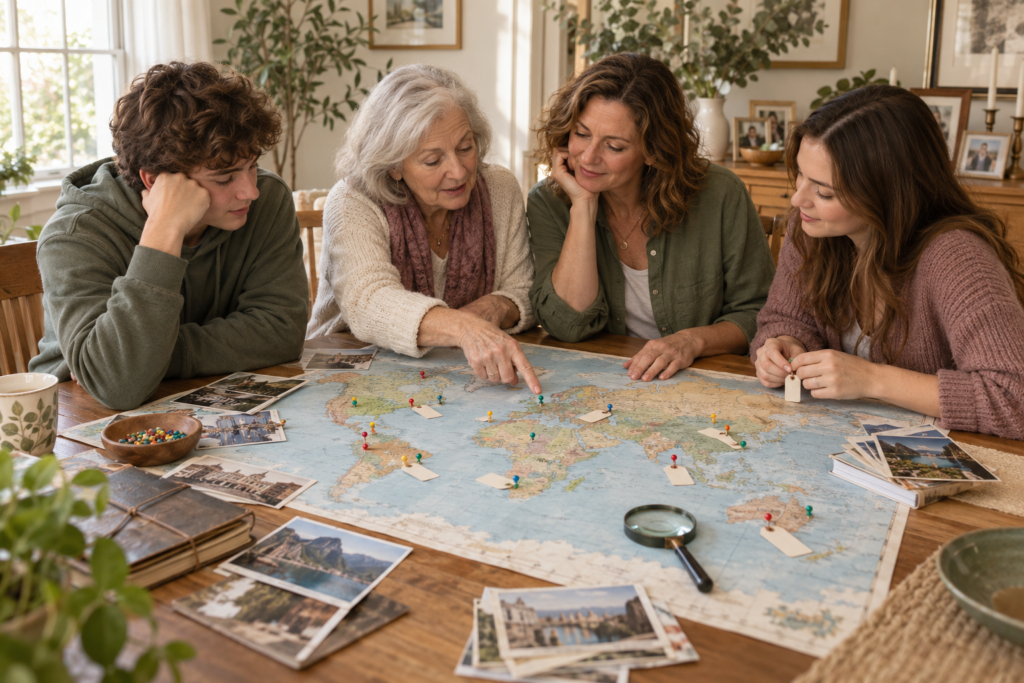
Hang up a simple map or print one at home. Invite family members to mark places they have lived, traveled, served, attended school, or hope to visit someday.
This can be a conversation starter without requiring anyone to share more than they want to. We may discover that two people visited the same place years apart or that a younger family member is curious about a grandparent’s hometown.
A map can also make room for remembrance. We might mark a meaningful church, a childhood home, a favorite vacation spot, or a place connected to someone we love.
13. Host a Taste-Test Table
Set out a few varieties of popcorn, chips, cookies, sauces, sparkling water, or ice cream toppings, and invite everyone to rate them just for fun. Keep it inexpensive and uncomplicated.
We can create categories such as “best movie-night snack,” “most surprising,” or “would buy again.” This activity is especially helpful when people are arriving at different times because they can join without needing a long explanation.
Be mindful of allergies, dietary needs, and anyone who may feel uncomfortable with food-centered activities. A taste test should always be an invitation, not the main measure of participation.
14. Make a Short Family Video
Set up a phone and record quick clips answering one prompt, such as “What do you hope our family remembers this year?” or “What is one piece of advice you’d give your younger self?”
Keep the clips optional and brief. Some people will love being on camera, while others may prefer to operate the phone, choose music, or help edit later. The finished video doesn’t need to be polished. A few honest clips can become a sweet record of a particular season.
15. End With a Simple Table Tradition
Not every gathering needs one more game. Sometimes the most meaningful activity is a small moment at the table.
We might invite anyone who wants to share one thing they’re grateful for, one person they want to encourage, or one hope they’re carrying into the next season. In a Christian home, this can naturally lead to a short prayer of thanks or a prayer for someone who needs care.
Keep it open-handed. Some family members may prefer to listen quietly, and that is still participation. We can offer the moment without demanding emotional depth from everyone in the room.
Plan for Different Needs and Energy Levels
A welcoming family gathering makes room for different ages, bodies, personalities, and circumstances. Before indoor or outdoor activities, check the route and gathering areas for cords, clutter, loose rugs, and other tripping hazards. Offer seated roles for anyone who would rather not move around much. The CDC recommends reducing household tripping hazards as one way to help prevent falls among older adults.
On hot days, plan outdoor activities for cooler morning or evening hours, provide water and shade, and encourage breaks. The CDC advises stopping activity if someone feels faint or weak. We can let each person decide what participation looks like, especially when health, mobility, or energy is a concern.
Most importantly, we can leave room for complicated family dynamics. Some gatherings include grief, estrangement, new relationships, financial strain, or people who are simply tired. A good activity won’t erase those realities. It can simply offer a gentle way to be together without pretending everything is easy.
Final Thoughts
The best family gathering activities are rarely the most elaborate. Often, they’re the ones that give us a shared laugh, a small task, a familiar story, or a reason to notice one another again.
We don’t need to create a perfect memory. We can set out a few welcoming options, hold our plans loosely, and allow simple moments of attention and kindness to be enough.