
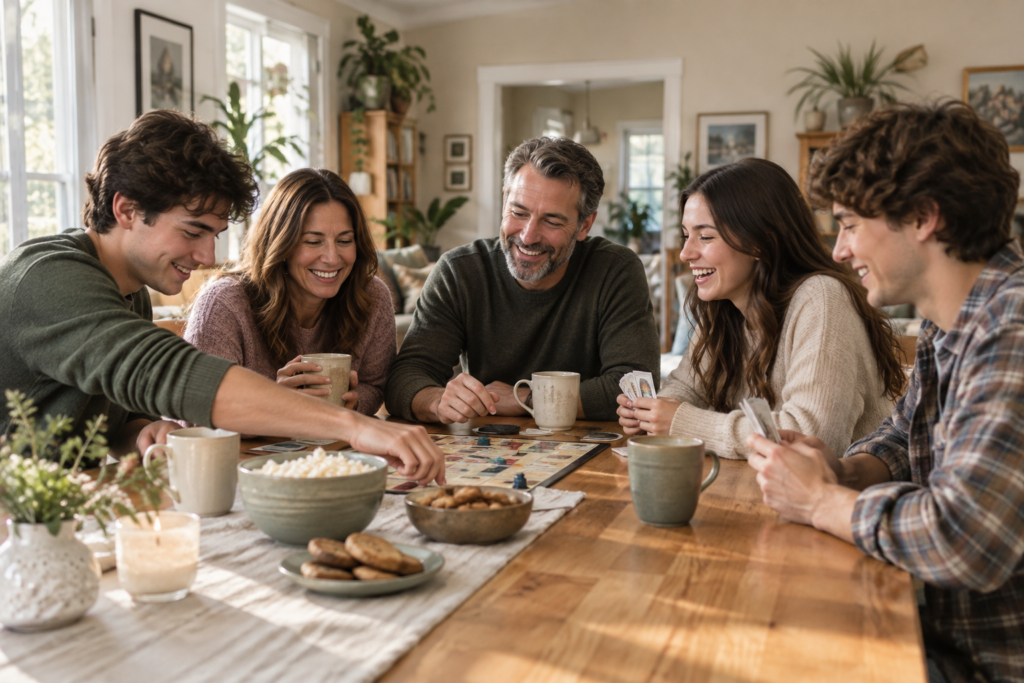
Family traditions can feel much easier when children are small. There are built-in rhythms: holiday pajamas, bedtime stories, birthday pancakes, matching costumes, and trips to see the lights. But as kids become teenagers, leave for college, start working, build relationships, or begin families of their own, the traditions that once worked may no longer fit.
That doesn’t mean the meaningful part is over. It simply means your family may need traditions that make room for changing schedules, growing independence, limited energy, and the people your children are becoming.
Starting family traditions with older kids is less about recreating childhood and more about creating dependable moments of connection. The best traditions often feel simple, flexible, and genuinely enjoyable rather than carefully staged.
Let Go of the Pressure to Recreate the Past
It’s understandable to miss the traditions your family once had. Maybe everyone used to bake cookies together, pile into the car for a holiday outing, or gather around the table without coordinating calendars first. Growing kids can change the emotional shape of home, and sometimes that change brings grief as well as pride.
Still, trying to preserve every old tradition exactly as it was can leave everyone feeling pressured. A teenager may not want to wear matching pajamas anymore. An adult child may not be able to come home for every holiday. A young adult’s partner, work schedule, or new responsibilities may need consideration too.
Instead of asking, “How do we get back what we had?” try asking, “What kind of connection would feel good for us now?”
That small shift creates room for new family traditions that honor the present season. Your family doesn’t need to perform closeness or prove its love through a packed calendar. A tradition can be as modest as a monthly meal, a yearly walk, or a shared way of marking important moments.
Invite Your Older Kids Into the Conversation
Older kids are far more likely to participate in a tradition when they have a voice in it. This doesn’t require a formal family meeting with an agenda. The conversation can happen over dinner, during a drive, or in a group text.
You might say, “I know our routines have changed, but I’d love for us to have a few things that feel like ours. Is there anything you’d actually enjoy doing together?”
That question matters because parents and their older kids may have different ideas about what connection looks like. One person may love a big holiday gathering, while another prefers a quiet breakfast or a movie night at home. Someone may not care about decorating cookies but would happily join an annual thrift-store outing or help make a favorite family recipe.
Listen without correcting their suggestions. If your child’s idea differs from yours, that doesn’t make it less meaningful. It may simply be better suited to the family you are now.
If they shrug or offer no ideas, don’t take it personally. Some kids need time to think, especially if family traditions have felt loaded or obligatory in the past. Begin with one low-pressure invitation and see what develops.
Choose Traditions That Fit Real Life
The traditions that last are usually the ones that fit your family’s actual capacity. That may mean choosing something inexpensive, local, brief, or easy to reschedule.

A meaningful tradition does not require weeks of planning, a large budget, or a perfectly clean house. In fact, traditions with too many moving parts can become another source of stress during already busy seasons.
Consider rhythms that can flex as work schedules, school demands, health needs, caregiving responsibilities, and travel plans change. For example:
- A standing coffee or breakfast date once a month
- A family group chat for sharing photos, funny moments, or encouragement
- A yearly “favorite things” dinner where everyone brings or makes one dish they love
- An annual movie night with takeout or homemade popcorn
- A seasonal walk, drive, or visit to a local park
- A birthday tradition where the person being celebrated chooses the meal or activity
- A simple day of serving together, such as helping a neighbor, supporting a community event, or preparing a meal for someone who needs care
- A shared playlist updated throughout the year
These ideas may sound ordinary, and that is part of their strength. Connection is often built through repeated, ordinary moments—not only through milestone celebrations.
Make Room for Independence and New Relationships
When children are older, family traditions need to make room for the lives they have beyond the home. Teenagers need growing freedom. Adult children may have jobs, partners, in-laws, roommates, children, or other commitments competing for their time. None of that automatically means they care less about family.
A tradition becomes more welcoming when participation is an invitation rather than a test of loyalty. That can be especially important around holidays, when unspoken expectations can quickly become heavy.
When possible, offer clear plans early: “We’re having dinner at 4 on Saturday. We’d love to have you there, and we understand if your schedule doesn’t allow it.” That lets them know they are wanted without making the invitation feel heavy.
If an adult child has a partner, include that person with genuine warmth. New relationships can change familiar family dynamics, but they can also widen the table in good ways. Avoid treating a partner like an obstacle to your “real” family tradition. A warm welcome, a thoughtful question, or an effort to learn what they enjoy can make a meaningful difference.
Some family relationships may be strained, distant, or unsafe. In those cases, traditions should never become a reason to ignore necessary boundaries. Peace is not the same as pretending nothing is wrong. If conflict is ongoing or communication feels difficult, a counselor, mediator, or another qualified professional may help your family find healthier ways forward.
Build Traditions Around Conversation, Not Just Activities
The activity itself matters less than the atmosphere around it. A family can attend the same annual event for years and still feel disconnected if no one feels seen. On the other hand, a simple meal at the kitchen counter can become a treasured tradition when it leaves room for honest conversation.
Older kids often appreciate being treated with growing respect. That doesn’t mean parents stop offering guidance or expressing concern. It means making space to hear their opinions, stories, frustrations, and hopes without turning every conversation into a lesson.
A few gentle questions can help a routine become more relational:
- What has been taking up most of your energy lately?
- Is there anything you’re looking forward to this season?
- What’s something that made you laugh this week?
- Is there a meal, place, or activity you miss from when you were younger?
- What would make family gatherings feel easier or more enjoyable for you?
Not every gathering needs a deep conversation. Sometimes laughter over a board game or quiet companionship while cooking is enough. But when your children know they can show up without being interrogated, corrected, or compared, they may be more willing to keep showing up.
Create Small Ways to Mark the Seasons
Family traditions do not have to revolve around major holidays. Smaller seasonal rituals can be easier to sustain and may feel less emotionally loaded.
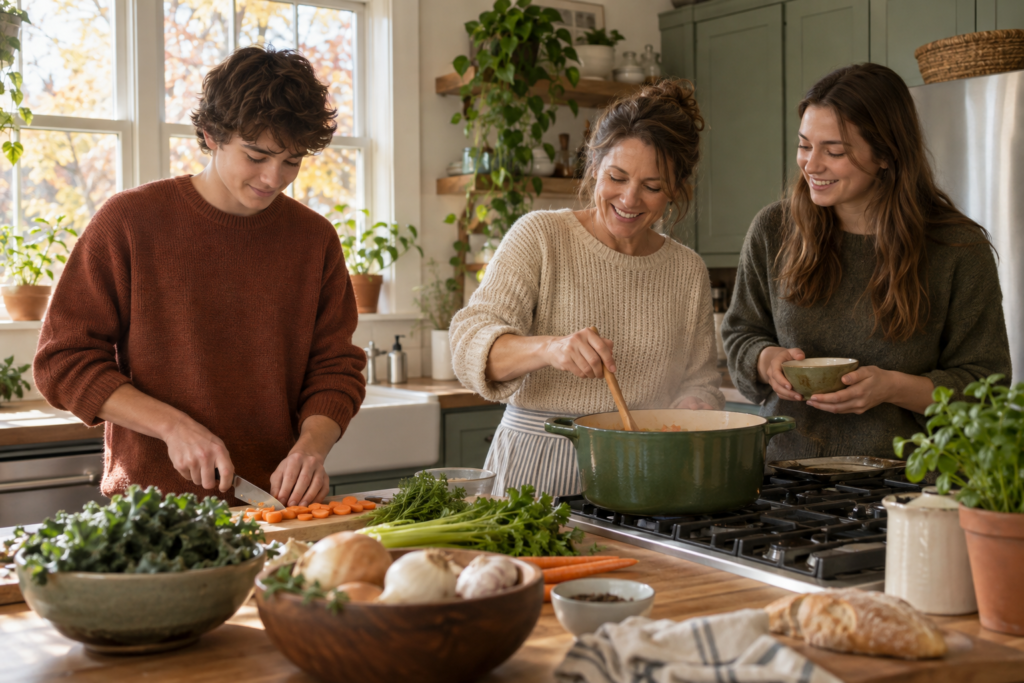
You might make soup together on the first chilly weekend of fall, take a spring photo in the same favorite spot each year, or choose one Saturday each summer for a picnic dinner outside. Your family could mark the start of a school year, a new job, a move, or a birthday month with a simple meal and a few words of encouragement.
For families who value faith, a tradition might include a short prayer of gratitude before a meal, lighting a candle during a meaningful season, or sharing what each person hopes for in the months ahead. Keep it natural and voluntary rather than using the moment to pressure someone into a particular response. The goal is to create space for reflection and care, not to make the gathering feel like an obligation.
Even a shared family recipe can become a quiet way of remembering and connecting. Ask an older child to teach everyone how they make their favorite pasta, dessert, or coffee drink. Let the recipe change. Let the tradition belong to more than one generation.
Expect Traditions to Evolve
One of the kindest things you can do is allow a tradition to change without calling it a failure. Some years, everyone may be available for a long weekend. In others, the tradition may become a video call, a mailed card, or a quick lunch between responsibilities.
A flexible tradition is not a lesser one. It reflects a love willing to adapt.
It can also help to notice what your family naturally returns to. Maybe everyone gathers in the kitchen when they visit. Perhaps siblings always send each other photos on a certain holiday. Maybe no one enjoys formal events, but they gladly show up to help one another move, paint a room, or care for a pet. Those patterns can become traditions when they are named and appreciated.
You don’t need to manufacture meaning at every turn. Sometimes a tradition begins because someone says, “We should do this again next year.”
Final Thoughts
Starting family traditions with older kids is not about holding tightly to childhood. It is about making room for connection as family life changes, with grace for busy schedules, different preferences, and growing independence.
Choose one simple idea that feels possible, invite rather than pressure, and let it become your own over time. The moments may look different than they once did, but they can still make home feel like a place where people are welcomed, remembered, and loved.