
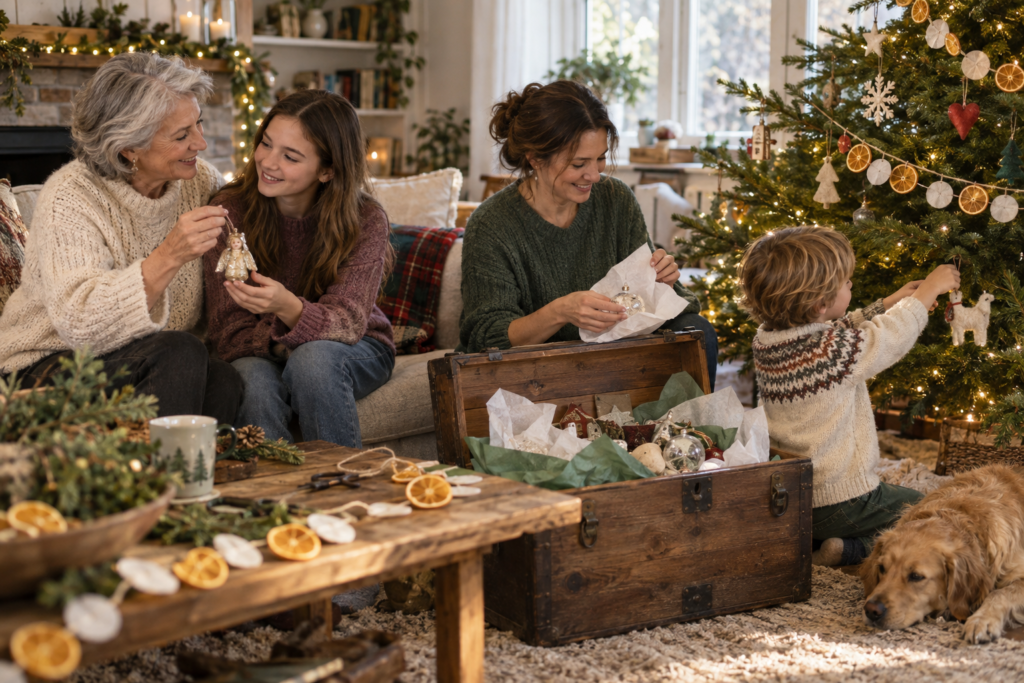
Holiday traditions often begin with good intentions: a favorite meal, a packed schedule of gatherings, matching pajamas, a yearly drive to see lights, or a carefully timed visit with relatives. Then our family changes. A new baby arrives. Children grow into teens. A marriage, separation, move, loss, blended-family schedule, tight budget, or health need shifts what is possible.
Changing holiday traditions can feel like letting someone down. But family traditions do not have to stay frozen in time to remain meaningful. They can grow with us. Treating traditions as flexible family rituals can help us hold on to what matters while making room for the people and limits in front of us now.
The goal is not to create a picture-perfect holiday. It’s to make choices that leave room for connection, rest, and a little joy.
Start With the Meaning Behind the Tradition
Before deciding whether to keep or change a tradition, it helps to ask what it was meant to give our family in the first place.
Maybe the annual cookie-baking day was never really about producing six kinds of treats. Maybe it was about working together in the kitchen. Perhaps traveling across town to see every relative was meant to communicate love and belonging. Maybe opening one gift on a certain evening created anticipation and a quiet moment at home.
When we name the purpose, we have more freedom to change the format.
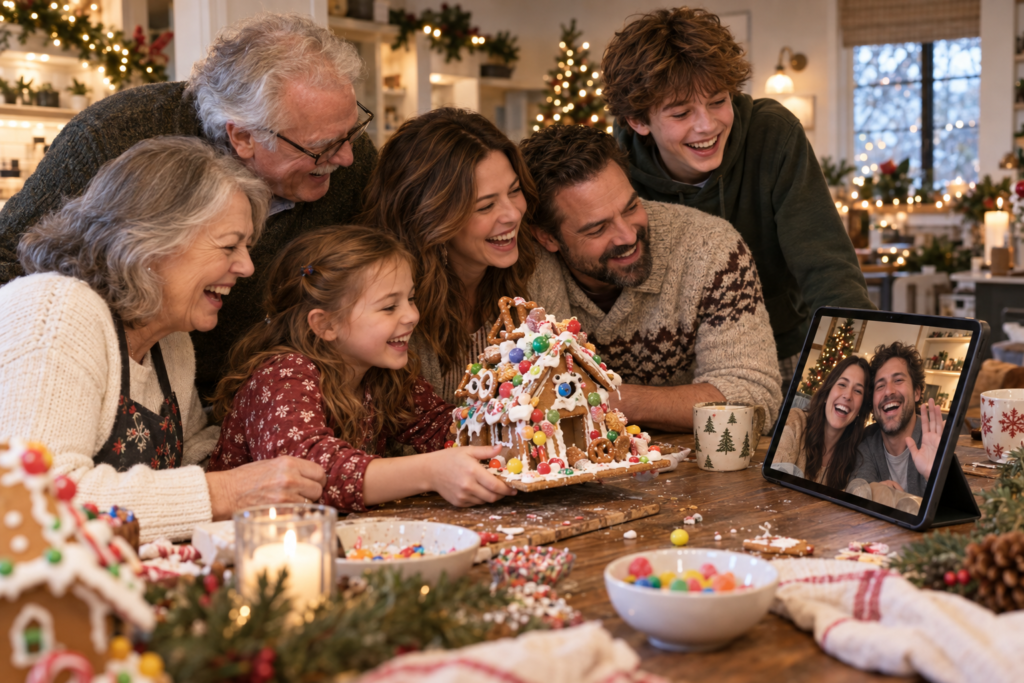
For example, a family that once spent an entire Saturday baking might now make one favorite recipe with young children and save the rest for another year. A big holiday breakfast may become cinnamon rolls from the freezer, fruit, and coffee in mugs we love. If travel is no longer manageable, a video call, mailed card, or separate visit in January may carry the same care without asking too much of everyone.
We do not have to preserve every detail to honor the heart of a tradition.
Use a Keep, Pause, and Try Conversation
When the holiday season starts to fill the calendar, a simple family conversation can prevent a lot of last-minute pressure. We can make three gentle categories:
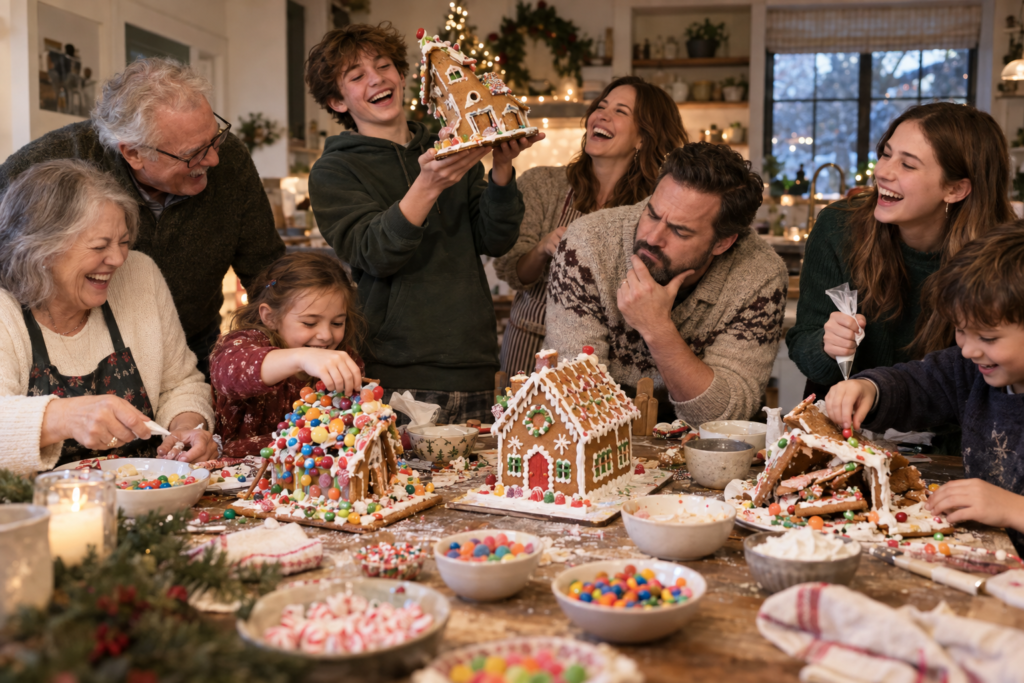
- Keep: traditions that still feel meaningful and workable
- Pause: traditions that are too stressful, expensive, complicated, or poorly timed this year
- Try: one new idea that fits our current season
This can be especially helpful when children are old enough to share their opinions. We might ask, “What is one holiday thing you really hope we keep?” and “What is one thing you would be happy to do differently?”
Their answers may surprise us. The event we assume is essential may not matter much to them, while a small ritual—hot chocolate after decorating, a favorite movie, or calling a grandparent—may be what they truly look forward to.
Giving children age-appropriate input does not mean they get to make every decision. Adults still need to protect the household’s budget, schedule, and well-being. But including children helps everyone understand that traditions belong to the family, not just to the person carrying most of the work.
For younger children, choices can be simple: “Would you rather decorate cookies or make paper snowflakes?” For older children and teens, we can ask for practical input, such as which gathering they most want to attend or what low-cost activity everyone might enjoy.
Let New Traditions Be Experiments
A changed tradition can feel surprisingly personal, even when the change is necessary. We may worry that a new plan will disappoint the children, offend relatives, or make the holiday feel unfamiliar.
It can help to call the first year an experiment.
Instead of declaring, “This is how we do holidays now,” we might say, “This year, we’re going to try celebrating on Saturday instead,” or, “We’re trying a quieter morning at home before we visit anyone.” Afterward, we can talk about what worked, what felt difficult, and what we would adjust next time.
This approach removes some of the pressure. A tradition does not need to become permanent simply because we tried it once.
Utah State University Extension suggests a similar balance for families navigating stepfamily life: retain some familiar rituals, avoid activities that repeatedly create conflict, and invite children to help create new ones. That wisdom can serve many kinds of changing families—not only blended ones. Keeping a few steady touchpoints while making space for something new can help a holiday feel both familiar and realistic.
If a family is blending households or coordinating custody schedules, flexibility may be especially important. Celebrating on a different day is still celebrating. A child can enjoy separate traditions in separate homes without being asked to choose which one matters more. One-on-one time between a parent and child can also remain valuable as new relationships and siblings become part of the picture.
Make Room for Real Limits
As families grow, holiday capacity often changes before our expectations do. A newborn may need frequent feeding and a calm environment. Toddlers may struggle with skipped naps and long car rides. Older children may have school activities, jobs, or other commitments. Adults may be carrying grief, financial strain, caregiving responsibilities, or simple exhaustion.
This is not a failure of holiday spirit. It is information.
The American Academy of Pediatrics encourages families to choose only the events they can reasonably handle and protect basic routines such as sleep, meals, exercise, and small, predictable moments of connection. For us, that might look like a bedtime story after a busy gathering, a quiet breakfast before opening the door to visitors, or an early departure from an event.
Sometimes the kindest choice is also the least dramatic one:
- Declining an invitation without a long explanation
- Arriving later or leaving earlier
- Bringing one store-bought dish instead of cooking several
- Splitting a celebration across two days
- Taking a year off from hosting
- Choosing one outing instead of trying to attend everything
We can be grateful for an invitation and still say no. We can love our extended family and still protect a child’s nap, our own energy, or a calmer day at home.
Adjust Traditions for Babies and Toddlers
The arrival of a baby or toddler often changes holiday traditions in very practical ways. Plans that once felt easy may now involve naps, snacks, car seats, bedtime routines, and a much closer look at safety.
If we are visiting friends or relatives, it is wise to do a quick child-safety check when we arrive. The American Academy of Pediatrics recommends watching for unsecured medicines and cleaning supplies, loose cords, open stairs, unlocked cabinets, and heavy objects that could be pulled down. We do not need to be embarrassed about moving a few items or asking where medications are stored. Safety is more important than pretending our child will not notice an interesting cabinet.
Holiday décor may need to change for a season, too. The U.S. Consumer Product Safety Commission advises keeping breakable ornaments, sharp decorations, and small removable pieces out of young children’s reach. Unattended candles and overloaded outlets also deserve extra care. A tree decorated mostly above toddler level, soft fabric ornaments, flameless candles, or a smaller display placed securely out of reach can still feel festive.
We should also take special care with light-up decorations, ornaments, and flameless candles that may contain button or coin batteries. These batteries can be dangerous if swallowed, so battery compartments should be secure and the items kept out of reach. If ingestion is suspected, seek emergency care immediately and do not induce vomiting. The AAP’s button battery guidance offers important details for parents and caregivers.
Changing a beloved decorating tradition may feel sad at first. But as children grow, we can revisit fragile heirlooms and other decorations that are not safe for the current season.
Be Gentle With Differences Between Households
Not every family is able—or wants—to celebrate in the same way. Some families have a full house of relatives nearby. Others are separated by distance. Some are navigating remarriage, foster care, adoption, estrangement, grief, military service, shift work, or a first holiday after a major change.
In these seasons, comparison can make ordinary decisions feel heavy. We may see other families’ elaborate celebrations and wonder whether our quieter, smaller, or less coordinated holiday is enough.
It can be.
A meaningful tradition might be a meal, a walk, a game, a favorite playlist, a phone call, or an evening with no agenda. It might happen on the official holiday, the weekend before, or a random Tuesday when everyone is finally available.
We can also make room for mixed feelings. Children may be excited about a new sibling and still miss how things used to be. Adults may welcome a new relationship while grieving a familiar rhythm. We do not have to force everyone to feel cheerful about every change. It is enough to listen, acknowledge what is different, and create a plan with care.
Focus on Connection, Not Performance
A review of research on family routines and rituals found associations with outcomes such as child adjustment and marital satisfaction, though the research has limitations and does not guarantee the same result for every family. What matters is not how elaborate a ritual looks from the outside. It is whether it supports the connection and steadiness our family needs.
That may mean doing less.
We can let the holiday meal be imperfect. We can skip the matching outfits. We can order dessert, simplify the guest list, or leave the decorations in the box this year. A tradition that requires one exhausted person to manage everything may need to be shared, shortened, or released.
As families grow, our job is not to recreate the holidays exactly as they were. It is to keep noticing who we are now.
Final Thoughts
Changing holiday traditions can bring both relief and sadness. We may miss the old version, even when the new one is clearly a better fit. That is a very human part of family life.
We can keep what gives us warmth, pause what brings unnecessary strain, and try one small new thing. Over time, our traditions can become less about meeting expectations and more about caring well for the people gathered around us.